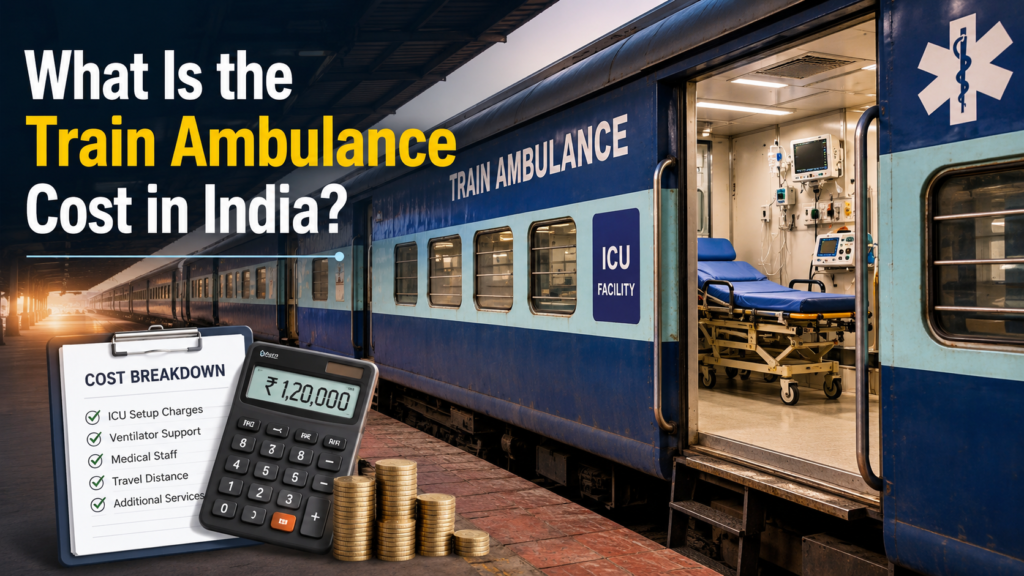
What Is the Train Ambulance Cost in India? This is one of the first questions families ask when a loved one needs long-distance medical transportation. The train ambulance cost in India varies depending on the patient’s condition, travel distance, ICU requirements, medical equipment, and the healthcare professionals accompanying the patient. For families looking for a reliable yet affordable alternative to air ambulances, train ambulance services provide advanced medical care during transit without placing an excessive financial burden on them.
Whether the patient requires ventilator support, post-surgical monitoring, cardiac care, or hospital-to-hospital transfer, understanding the actual cost of a train ambulance cost in india can help families make informed decisions. This guide explains everything you need to know about train ambulance pricing, factors affecting charges, city-wise estimates, hidden costs, and practical ways to save money while ensuring patient safety.
What Is the Train Ambulance Cost in India in 2026?
The average train ambulance cost in India generally ranges between ₹45,000 and ₹1,20,000 depending on the complexity of the case and the distance covered.
Below is an estimated cost breakdown:
| Service Type | Estimated Cost |
|---|---|
| Basic Medical Transfer | ₹45,000 – ₹60,000 |
| Semi-ICU Train Ambulance | ₹60,000 – ₹85,000 |
| Full ICU Train Ambulance | ₹85,000 – ₹1,10,000 |
| Ventilator Train Ambulance | ₹90,000 – ₹1,20,000 |
| Critical Care Patient Transfer | ₹1,00,000+ |
The final cost depends on multiple medical and logistical factors that vary from patient to patient.
Why Are More Families Choosing Train Ambulance Services?
India’s healthcare system often requires patients to travel from smaller cities to metropolitan hospitals for specialized treatment. While air ambulances offer speed, they are often beyond the budget of many families.
A train ambulance provides:
- Continuous medical supervision
- Advanced ICU facilities
- Cost-effective long-distance transportation
- Better comfort during travel
- Availability across major railway routes
- Hospital-to-hospital transfer support
For many families, train ambulances offer the ideal balance between affordability and quality medical care.
Factors That Affect What is the Train Ambulance Cost in India
1. Distance Between Cities
Distance is one of the biggest factors influencing train ambulance charges.
Examples:
- Patna to Delhi costs less than Patna to Mumbai.
- Kolkata to Chennai costs less than Kolkata to Bangalore via indirect routes.
Longer distances require more medical supervision, additional consumables, and extended equipment usage.
2. Patient’s Medical Condition
The patient’s health status significantly affects pricing.
A stable patient may only require:
- Oxygen support
- Basic monitoring
A critical patient may require:
- Ventilator support
- Continuous ICU care
- Specialist doctor supervision
Naturally, critical care transfers increase the overall train ambulance cost.
3. Type of Medical Equipment Required
Modern train ambulances may include:
- Ventilators
- Multiparameter monitors
- Defibrillators
- Infusion pumps
- Oxygen cylinders
- Suction machines
The more advanced the equipment required, the higher the transportation cost.
4. Medical Team Accompanying the Patient
The number and qualification of medical professionals impact pricing.
Possible team members include:
- MBBS Doctor
- Critical Care Specialist
- ICU Nurse
- Paramedic
- Emergency Medical Technician
Highly specialized medical teams typically increase service costs.
5. Train Category and Coach Type
Train ambulance services often utilize:
- Rajdhani Express
- Duronto Express
- Premium Express Routes
- First AC Coaches
- Second AC Coaches
Premium train categories and private compartments generally cost more.
Train Ambulance cost in India Based on Patient Type
One of the most overlooked factors when calculating train ambulance expenses is the patient’s medical category.
| Patient Category | Estimated Cost Range |
|---|---|
| Stable Patient | ₹45,000 – ₹65,000 |
| Post-Surgery Patient | ₹55,000 – ₹75,000 |
| Stroke Patient | ₹65,000 – ₹95,000 |
| Cardiac Patient | ₹70,000 – ₹1,00,000 |
| Ventilator Patient | ₹90,000 – ₹1,20,000 |
| Organ Transplant Patient | ₹80,000 – ₹1,10,000 |
This variation exists because each medical condition requires a different level of care and equipment.
City-Wise Train Ambulance Cost Estimates in India
Patna to Delhi
₹45,000 – ₹65,000
Patna to Mumbai
₹60,000 – ₹85,000
Delhi to Hyderabad
₹55,000 – ₹80,000
Kolkata to Chennai
₹50,000 – ₹75,000
Bangalore to Delhi
₹65,000 – ₹95,000
Hyderabad to Patna
₹55,000 – ₹90,000
These figures are approximate and may vary depending on patient condition and service inclusions.
What Is Included in the Train Ambulance Cost in India?
Most professional providers include several services within their package.
Medical Escort Team
Patients are accompanied by trained professionals who continuously monitor their condition.
ICU Equipment
The package often includes:
- Cardiac monitor
- Ventilator
- Oxygen support
- Suction machine
- Emergency medications
Railway Coordination
Service providers handle:
- Ticket arrangements
- Coach allocation
- Travel coordination
Ambulance Transfers
Many providers include:
- Hospital-to-station pickup
- Station-to-hospital drop
This creates a seamless door-to-door patient transfer experience.
Hidden Charges Families Should Watch Out For
Many families focus only on the quoted price and overlook additional expenses.
Emergency Booking Charges
Last-minute arrangements often attract premium fees.
Extra Medical Equipment
Additional ventilators or specialized devices may incur separate charges.
Platform Handling Charges
Patient movement inside railway stations sometimes involves additional manpower expenses.
Extended Medical Team Costs
Long-distance journeys requiring extra staff may increase total costs.
Always request a detailed estimate before confirming a booking.
Train Ambulance Cost vs Air Ambulance Cost
| Feature | Train Ambulance | Air Ambulance |
|---|---|---|
| Average Cost | ₹45,000 – ₹1,20,000 | ₹2.5 Lakh – ₹8 Lakh |
| Accessibility | High | Limited |
| ICU Support | Available | Available |
| Travel Comfort | High | Moderate |
| Best For | Stable & Critical Long-Distance Transfers | Emergency Transfers |
For non-immediate emergencies, train ambulances often provide better value for money.
How Families Can Reduce Train Ambulance Expenses
Book Early Whenever Possible
Advance planning helps avoid emergency premiums.
Compare Multiple Service Providers
Request quotes from different providers before making a decision.
Confirm Included Services
Ensure that:
- Ambulance transfers
- Medical staff
- Equipment
- Consumables
are included in the quoted price.
Select Appropriate Medical Support
Avoid paying for unnecessary services while ensuring essential care remains available.
Questions to Ask Before Booking a Train Ambulance
Before finalizing any provider, ask:
- Is a doctor included during the journey?
- Is ventilator support available if required?
- Are station transfers included?
- What equipment will accompany the patient?
- Is emergency support available throughout the journey?
- What charges are not included in the quote?
These questions help avoid confusion and unexpected expenses.
Real-Life Example
A 62-year-old stroke patient in Patna required specialized neurological treatment in Delhi. Due to the patient’s condition, commercial travel was not considered safe.
A train ambulance was arranged with:
- Ventilator backup
- Oxygen support
- Cardiac monitoring
- Doctor escort
- Hospital-to-hospital transfer
The patient completed the journey safely while receiving continuous medical supervision. Compared to an air ambulance, the family saved a substantial amount without compromising on medical care.
Frequently Asked Questions
What is the train ambulance cost in India for ventilator patients?
Ventilator-supported patient transfers typically range between ₹90,000 and ₹1,20,000 depending on distance and equipment requirements.
Is train ambulance cheaper than air ambulance?
Yes. Train ambulance services are significantly more affordable than air ambulances while still providing advanced medical care.
Can critical patients travel by train ambulance?
Yes, provided they are medically assessed and approved for rail transportation.
Are train ambulance services available across India?
Coverage depends on the individual insurance policy. Families should consult their insurer for clarification.
Does insurance cover train ambulance expenses?
Coverage depends on the individual insurance policy. Families should consult their insurer for clarification.
Conclusion
what is Train Ambulance Cost in IndiaThe answer depends on several factors, including patient condition, distance, medical equipment, and the level of healthcare support required during travel. While costs typically range from ₹45,000 to ₹1,20,000, train ambulances remain one of the most affordable and medically reliable solutions for long-distance patient transportation in India.
For families seeking safe, professionally managed, and cost-effective medical transfers, train ambulance services offer a practical alternative that prioritizes patient comfort, safety, and continuous care throughout the journey.
also read: how to book train ambulance